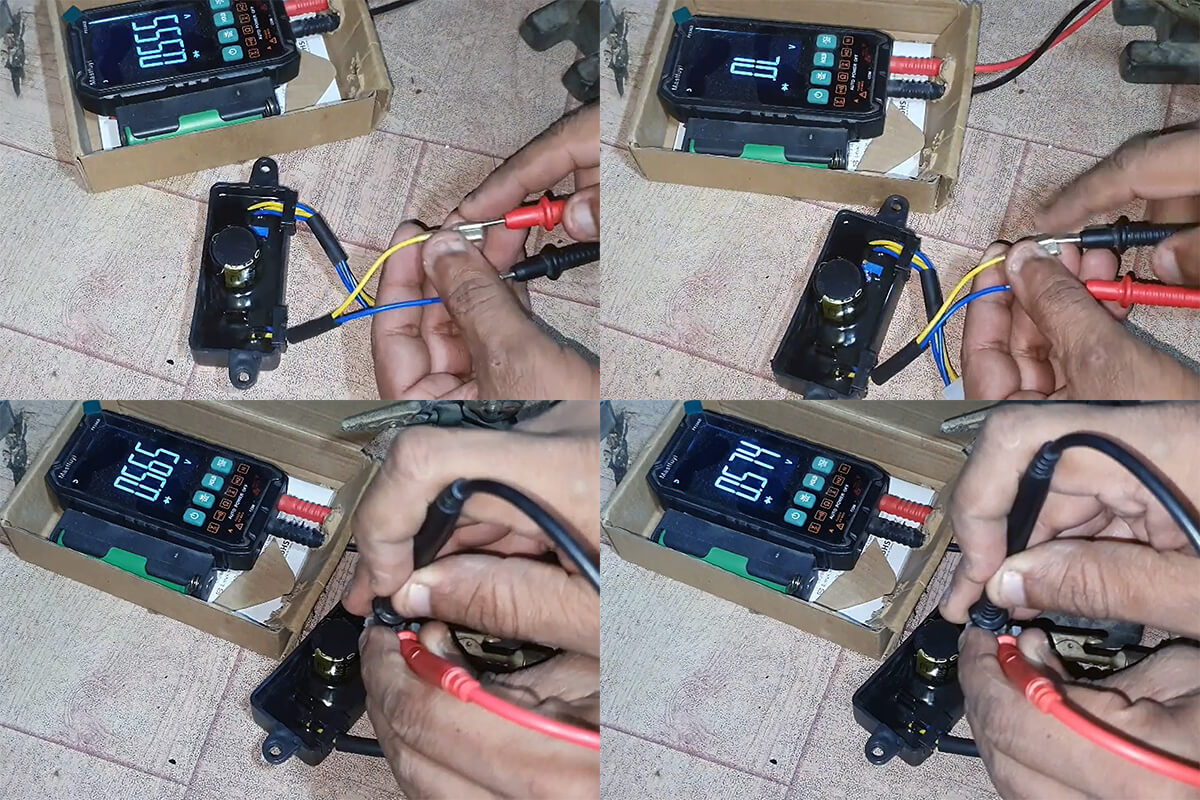
A generator automatic voltage regulator (AVR) is a critical component in a generator system that controls and maintains a stable output voltage. AVR testing is essential in generator maintenance because it affects overall performance, voltage stability, and the safety of connected electrical equipment. A faulty generator AVR can cause power instability and may damage sensitive devices.
Regular inspection and testing help ensure efficient and safe operation under different load conditions. This blog explains how to test a generator AVR with a digital multimeter step-by-step, helping you diagnose problems and maintain reliable generator performance.
Understanding the generator AVR
A generator’s automatic voltage regulator (AVR) controls the excitation current supplied to the alternator, maintaining a stable voltage output. It continuously monitors the generator’s output and adjusts the excitation current in response to load demand, ensuring a consistent voltage even when loads change suddenly. This prevents overvoltage and undervoltage conditions.
It monitors the generator’s output and automatically adjusts internal settings. A typical AVR includes an amplifier circuit, control logic circuitry, a transducer (input sensor), an analog-to-digital converter, and a controller. It is also used in applications such as emergency lighting systems and motor speed control.
Common causes of AVR failure
- Sudden power changes: brownouts or surges can damage the AVR
- Incorrect wiring: improper wiring can overload the AVR
- High ambient temperature: overheating leads to component degradation
- Effects of aging: internal components wear out over time
- Excessive vibration: can damage internal connections
- Rust or corrosion: causes electrical damage and failure
- Overload: excessive current can lead to breakdown
- Short circuit: can damage or destroy the AVR
- Uneven generator engine speed: causes instability and malfunction
- Excessive noise or interference: disrupts AVR operation
- Water damage: causes short circuits and failure
Locating and inspecting the generator AVR
Identifying the AVR unit
The generator AVR is usually installed inside the alternator housing, often near the rear cover of the generator. In brush-type systems, it is usually located near the brush assembly, while in brushless alternators, it is positioned close to the excitation wiring.
The AVR is typically a small rectangular electronic module with several terminal connections and wiring harnesses attached. It is often enclosed in a compact plastic or epoxy case. Common markings include F+, F-, sensing input, and a voltage adjustment potentiometer, which help identify it as the AVR.
Visual and static inspection
The AVR should appear clean and undamaged, with secure wiring and intact components. Perform a visual inspection for signs of damage before electrical testing.
- Burn marks or darkened areas on the casing or circuit board
- Discoloration from overheating or electrical stress
- Inspect for loose, broken, or corroded wiring connections
- Swollen or bulging components, especially capacitors
- A burning smell indicates internal damage or overheating
In some cases, visible damage such as burned parts or loose wiring already confirms AVR failure and reduces the need for further testing.
Safety precautions and required tools
Safety precautions
- Turn off the generator completely before starting any inspection or testing procedure.
- Disconnect all power sources to ensure the system is fully isolated.
- Avoid contact with live wires and high-voltage terminals around the alternator and AVR connections.
- Work in a dry and stable environment to reduce the risk of electrical short circuits or slipping hazards.
- Safely discharge capacitors before touching the AVR or related circuits, as stored energy may still be present after shutdown.
- Use proper grounding practices when handling electrical components to prevent static discharge or accidental shock.
- Wear personal protective equipment such as safety glasses and insulated gloves.
- Identify test points using schematics or manuals to ensure accurate measurements.
Required tools for generator AVR testing
- Digital multimeter – used to measure voltage, resistance, and continuity for AVR diagnosis
- Insulated screwdrivers – for safe removal of covers and access to AVR terminals
- Alligator clips – for secure and stable test connections
How to test a generator AVR with a multimeter?
Step 1 – Multimeter settings and preparation
When testing the AVR, carefully identify the correct terminals, such as field (F+ / F−), sensing input, and output connections, before placing probes.
Always insert the black probe into the COM (common) terminal and the red probe into the VΩ or voltage terminal, depending on the test mode. Hold probes using insulated handles only. Avoid touching metal probe tips during measurement.
Calibration and pre-test checks
- Confirm the multimeter reads zero or a stable value in resistance mode when the probes touch.
- Check the continuity function for probe integrity.
- Inspect leads for damage or loose connections.
- Set the correct measurement range (auto or manual)
Step 2 – Continuity and wiring check (Ω mode)
Set the multimeter to resistance (Ω) or continuity mode.
- Check field windings, excitation circuits, and wiring connections.
- Ensure all AVR connections are tight and properly secured.
- Test continuity from the AVR power supply’s positive side to the connection points
Expected results:
- Continuous circuits are applicable.
- Low but not zero resistance for windings
Abnormal results:
- Infinite resistance → open circuit or broken winding
- Zero resistance → short circuit or wiring fault
Step 3 – Diode test (rectifier inspection)
Set the multimeter to diode test mode.
- Test rectifier diodes in forward and reverse directions
- Check internal AVR or excitation circuit diodes.
Expected results:
- Forward direction: 0.4V–0.7V drop
- Reverse direction: no reading (OL)
Abnormal results:
- Conducting both directions → shorted diode.
- No conduction both ways → open diode
Step 4 – Input voltage test (AC from stator to AVR)
Set the multimeter to AC voltage mode (V~)
- Place probes on the AVR input terminals from the stator
- Start the generator and stabilize the speed before testing.
Expected result:
- Stable AC voltage within the specified excitation range
Abnormal results:
- No voltage → stator or wiring fault
- Low voltage → weak excitation or damaged stator
- Fluctuating voltage → unstable speed or poor connection
Step 5 – Output voltage test (DC at F+ and F−)
Set the multimeter to DC voltage mode (V⎓)
- Connect the red probe to F+ and the black probe to F−
- Run the generator under normal load conditions.
- Observe the AVR output reading.
Expected result:
- Stable DC output (commonly 5V–90V DC depending on model)
- Within ±10% of the manufacturer’s specification
Abnormal results:
- No output → faulty AVR or broken excitation circuit
- Low output → weak regulation or internal damage
- High/unstable output → over-excitation or control failure
Interpreting test results
Indicators of a healthy AVR
- Stable DC output voltage at F+ and F- within the normal operating range, without sudden spikes or drops
- Consistent AC input voltage from the stator during generator operation
- Correct diode condition, showing proper forward voltage drop and no reverse conduction
- Resistance values within specification, with proper continuity and no open or short circuits
- Stable voltage regulation even when load conditions change
These results show that the AVR is properly regulating excitation current and maintaining stable generator output.
Signs of AVR failure
- No DC output voltage at F+ and F-, indicating total AVR failure or loss of excitation control
- Unstable or varying voltage readings, suggesting a faulty control board or poor internal regulation
- Zero resistance readings, indicating a short circuit in the AVR or wiring
- Infinite resistance (OL), indicating open circuits, broken connections, or failed internal parts
- Incorrect diode test results, such as conduction in both directions or no conduction, indicate rectifier failure.
Summary
This guide aims to help you understand how to test a generator AVR with a multimeter, including selecting the correct settings and obtaining accurate readings. Following a structured testing method helps avoid unnecessary part replacement and makes it easier to identify the actual issue. Routine maintenance and timely inspection also contribute to a longer AVR service life and stable long-term performance.
As a professional generator and generator parts manufacturer based in China, BISON delivers generators and generator AVRs built for stable voltage output, long-term reliability, and easy maintenance — making them the preferred choice for dealers and distributors worldwide. We welcome you to contact BISON to establish a business partnership and drive the flourishing growth of your enterprise.
FAQs