Welder generators are crucial for powering equipment in places without grid access. They ensure smooth welding on remote sites, construction areas, or industrial spaces, etc.
Selecting welder generators starts with deciding between gasoline and diesel power. This decision will greatly influence efficiency, cost, and longevity aspects. Picking a proper welder generator depends on your welding requirements. Consider your budget, power needs, worksite conditions, and frequency of use.
This article introduces the differences between gasoline and diesel welder generators. It covers their pros, cons, and applications. By the end, you will know how to pick the right welder generator for your needs. Whether you are experienced or new to welding, this guide helps ensure a smart choice. Let us dive in!
Gasoline welder generators
Definition and features
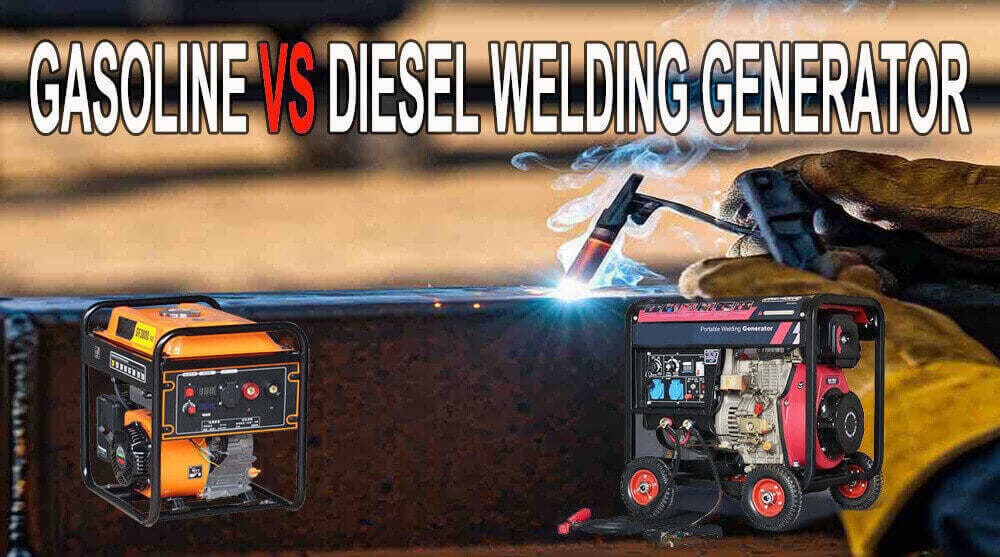
Gasoline engine-driven welders use a gasoline engine to power an integrated welding power source and, on some models, auxiliary AC outlets. These welder generators are portable and easy to use; they are great for small jobs, mobile work, and projects needing flexibility.
Advantages
- Gasoline welder generators are typically cheaper upfront than diesel ones of equivalent power rating. They’re a practical choice for beginners and those with limited budgets.
- Gasoline welder generators are lightweight and compact, and can be easily moved. They are perfect for jobsites requiring frequent relocation.
- Best for smaller welding tasks, like repairs or occasional tasks.
- Gasoline engines generally offer a noise advantage near neighboring homes or businesses.
- Starting them in cold weather is typically easier, which is useful for winter outdoor jobs.
Disadvantages
- Gasoline welder generators burn more fuel than diesel, raising operating costs over time.
- Not built for heavy-duty or constant use. Overwork can shorten their lifespan.
- They produce more emissions, which could be a problem in areas with strict environmental laws.
- While a gasoline welder generator is portable and affordable, it is not suitable for industrial-scale welding.
Diesel welder generators
Definition and features
Diesel welder generators run on diesel fuel to power welding equipment. A diesel engine-driven welder-generator combines a diesel engine, an electrical generator and a welding power source in one chassis, so it makes its own power rather than depending on a mains supply like plug-in welding equipment. They are designed for some tough and heavy-duty welding tasks, perfect for industrial-grade and large-scale projects. They are reliable for long, demanding operations. They are a top choice for professional welders.
Advantages
- Diesel engines use less fuel than gasoline ones, and they run efficiently over long periods. Diesel welder generators can cut running costs during heavy use.
- Diesel models deliver steady, strong power and higher energy output, making them ideal for large-scale or high-intensity welding operations.
- Diesel welder generators are built to last. Their engines handle heavy work for long hours, perform well, and have a longer life in tough conditions.
- Because of their rugged construction and durability, diesel welder generators generally have a higher resale value than gasoline models. This helps users when upgrading or reselling.
Disadvantages
- They cost more upfront than gasoline models. This can be difficult for those with limited budgets, despite long-term savings.
- Diesel welder generators are harder to move, due to their size and weight.
- They are complex and need regular attention, especially the fuel system.
- Starting in freezing temperatures is harder without extra systems like block heaters.
- Diesel welder generators are noisier, which can be a problem for those working in noise-sensitive areas.
- Overall, diesel welder generators are high-performance and efficient, but also have higher initial cost, weight, and maintenance requirements, and need careful consideration.
Factors to compare when choosing a welder generator
Consider key factors when picking a welder generator. Make sure it suits your work and needs. And here are some key points:
- Budget: Budget matters most when choosing welder generators. Diesel welder generators cost more upfront, but last longer and use less fuel. Gasoline welder generators are cheaper to purchase, but cost more to run and maintain. Balance the initial price with long-term savings.
- Power requirements: Know your power needs. Diesel welder generators deliver high power, perfect for heavy-duty welding applications that require high current and consistent performance. While gasoline welder generators are good for lighter welding tasks and cost less. Choose based on your project demands.
- Job site conditions: Job site conditions guide your choice. Diesel welder generators have long-term reliability in remote or tough areas. While gasoline welder generators are lighter, they are better for carrying around rough terrain. For remote jobs requiring long runtimes, favor diesel when fuel deliveries are practical and fuel can be stored safely. Pick based on work surroundings.
- Frequency of use: How often you use a welder generator matters. Due to their durability and fuel efficiency, diesel welder generators handle frequent, long use well. For occasional or small jobs, gasoline welder generators are sufficient and cost less.
- Portability requirements: Portability matters for mobile welders. Diesel welder generators are powerful and heavy, making them less suitable for mobile use. If you prioritize portability, gasoline welder generators are lighter and come with optional wheels and handles.
- Environmental impact: Think about emissions and noise. Diesel welder generators emit more, but newer models meet standards. They’re also louder, which can be an issue. Gasoline welder generators are quieter and may suit low-noise sites better.
Conclusion
Gasoline and diesel welder generators differ in key areas. At equivalent power ratings, gasoline welder generators typically cost less upfront and are lighter. They’re good for occasional and portable use. Diesel welder generators are powerful, fuel-efficient, and durable. They suit industrial and frequent use, but cost more, are heavier, and struggle in extreme cold.
So, when selecting the right welder generator, please think about your needs, budget, and jobsite, and so on. Do you want a welder generator that offers portability and affordability for light projects? Or does your welding operation require steady power and durability for intensive, long-term use? Then, start a business partnership with BISON welder generator supplier.
Whether it is gasoline or diesel, the right BISON welder generator can power your welding work, maximize productivity, and bring lasting value. Import affordable and reputable BISON welder generators from China today and take your welding projects to the next level!
FAQs