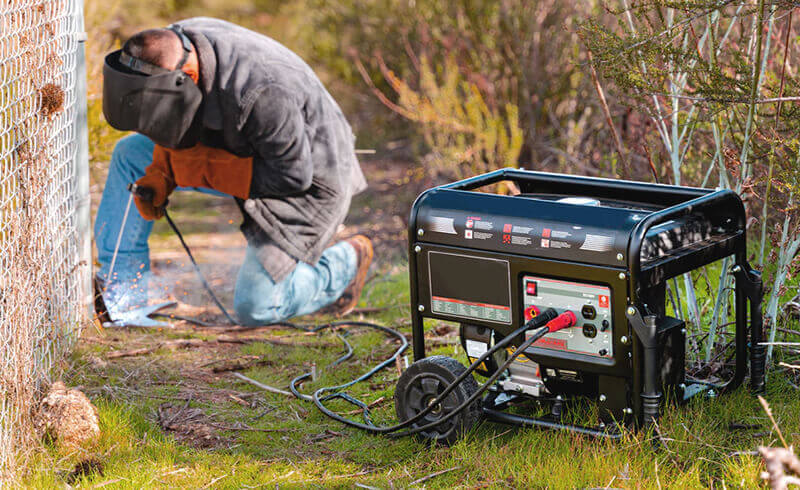
Welding plays a crucial role in numerous industries and DIY endeavors, necessitating a dependable and steady power source for top-notch outcomes. However, if a specialized welder generator is unavailable, is it possible to use a regular generator to handle welding?
A regular generator can run a welder only when it supplies the welder’s required 120V or 240V voltage, sufficient continuous wattage and surge capacity, and stable voltage and frequency. Sizing also depends on welding process, input rating, amperage, duty cycle, and inverter versus transformer technology. In this blog, we explain when a regular generator can handle welding, what to check before connecting a welder, and when to choose a welder generator.
Factors to consider when welding with regular generators
With a smart decision and proper practice, regular generators can effectively complete welding. Consider the following crucial factors:
1. Choose the right generator
The initial step in employing a regular generator for welding involves selecting the appropriate model. Ensure that the standard generator you select has the capacity to supply sufficient power for your welding tools. Additionally, factors such as portability, operational duration, and noise emission should be considered when choosing a regular generator.
2. Properly ground a regular generator
Proper grounding is crucial for maintaining safety in welding tasks. Insufficient grounding may cause electrical dangers, including electric shocks, harm to generators, or malfunctions in welding equipment.
When operating a welder from a generator, place the generator on a stable surface and use the grounding and bonding arrangement specified for that generator and connection method.
How to ground a generator:
Use a 6 to 8-foot-long ground rod and drive it into the soil. Securely connect the ground wire on the common ground terminal to the ground rod. Follow your generator’s owner’s manual for specific grounding instructions.
3. Maintain proper ventilation
Regular generators release noxious gases during operation, like carbon monoxide. In the same vein, the process of welding emits dangerous gases.
- Operate fuel-powered portable generators outdoors only, away from doors, windows and vents, with exhaust directed away from occupied areas.
- Provide sufficient ventilation to avoid overheating the generator and welding equipment.
- Use carbon-monoxide detectors.
4. Choose the right welding technique
The type of welding technique you use affects power requirements:
- Stick welding: has higher power requirements, tolerates minor fluctuations, and is suitable for use with simpler conventional generators.
- TIG welding: has lower power requirements but requires a steady output, best supported by an inverter generator.
- MIG welding: has moderate power requirements, operates best with a steady voltage, and can be achieved with a high-quality generator.
Stick welding is generally the most compatible technique when welding with a regular generator. For TIG or MIG welding, purchase a generator with a cleaner power output, such as an inverter generator.
5. Avoid generator overload
Overloading the generator can damage the generator and equipment connected to it. An undersized generator can itself overheat or be destroyed, and one that falls below the welder’s required draw can suffer excess strain and power spikes that damage either the generator or the welder’s internal components, or cause shutdowns.
How to prevent overload:
- Understand the operation and peak power capacity of the generator, and evaluate its running watts rather than treating its peak rating as continuous capacity.
- Avoid connecting other high-power equipment to the generator while welding.
- Use a power meter to monitor power consumption during welding.
6. Keep the generator clean and well-maintained
Dirt and debris can affect generator performance. Maintain the air filter, engine oil and, where fitted, spark plug according to the generator manual. With the engine stopped and cool, visually check fuel lines for leaks or damage. Do not operate a leaking generator.
7. Use proper protective gear
Using a regular generator for welding presents safety risks. So make sure you’re adequately protected by using a welding helmet with the right shade. Also, wear welding gloves, flame-resistant clothing, and steel-toed boots for additional safety.
Use hearing protection if operating the generator for extended periods of time. Avoid touching live wires or terminals with wet or unprotected hands.
8. Monitor voltage and frequency stability
Voltage or frequency changes can harm weld quality and the generator machine. Use a regular generator with a voltage regulator or AVR to keep the output stable.
9. Moisture and weatherproofing
Generators and welding equipment are sensitive to moisture. Water can cause electrical shorts and damage the equipment. Operate in a dry environment. If weather protection is needed, use a suitable open canopy that keeps the generator dry without enclosing it or obstructing cooling airflow and exhaust. Do not run a portable generator inside a shed.
10. Resolve unstable generator output
If generator output is unstable, stop welding and have the cause checked before continuing. A power conditioner or stabilizer is not a substitute for adequate generator capacity or correct operation. Use one only when its manufacturer confirms suitability for the generator, welder and load.
Risks of welding with regular generators
Welding with an unsuitable or overloaded generator can compromise weld quality, damage equipment and create safety hazards. These risks depend on the generator’s capacity, power quality and operating conditions—not simply on whether it is sold as a regular generator. The table below summarizes problems that can occur when the equipment or setup is unsuitable.
| Risks | Impact/Consequences |
| Power fluctuations | Poor weld quality, weak bonds, erratic performance. |
| Generator overload | Overheating, downtime, premature equipment failure. |
| Shortened equipment life | Accelerated wear of regular generator and welder components. |
| Power surges | Damage to sensitive equipment, increased risk of electric shock. |
| Fire hazard | Sparks combined with generator overheating increase the likelihood of fire. |
| Noise and exhaust issues | Health risks to operators and environmental pollution. |
| Fuel supply and runtime limits | A fuel tank or runtime poorly matched to the job can interrupt welding and increase refueling needs. |
| Welder–generator incompatibility | Poor performance or shutdown when the supply does not meet the particular welder’s input requirements. |
Summary
A regular generator can handle welding when it meets the particular welder’s voltage, continuous-power, surge and power-quality requirements. Confirm compatibility with the welder manufacturer before choosing the generator. For frequent off-grid welding, consider an engine-driven welder generator that supports the required process, welding output and duty cycle.
As a professional welder generator manufacturer in China, BISON offers the most detailed product customization solutions and welder generators with the highest performance. If you’re a distributor looking for a cost-effective welder generator, contact BISON today to start a business partnership!
FAQs