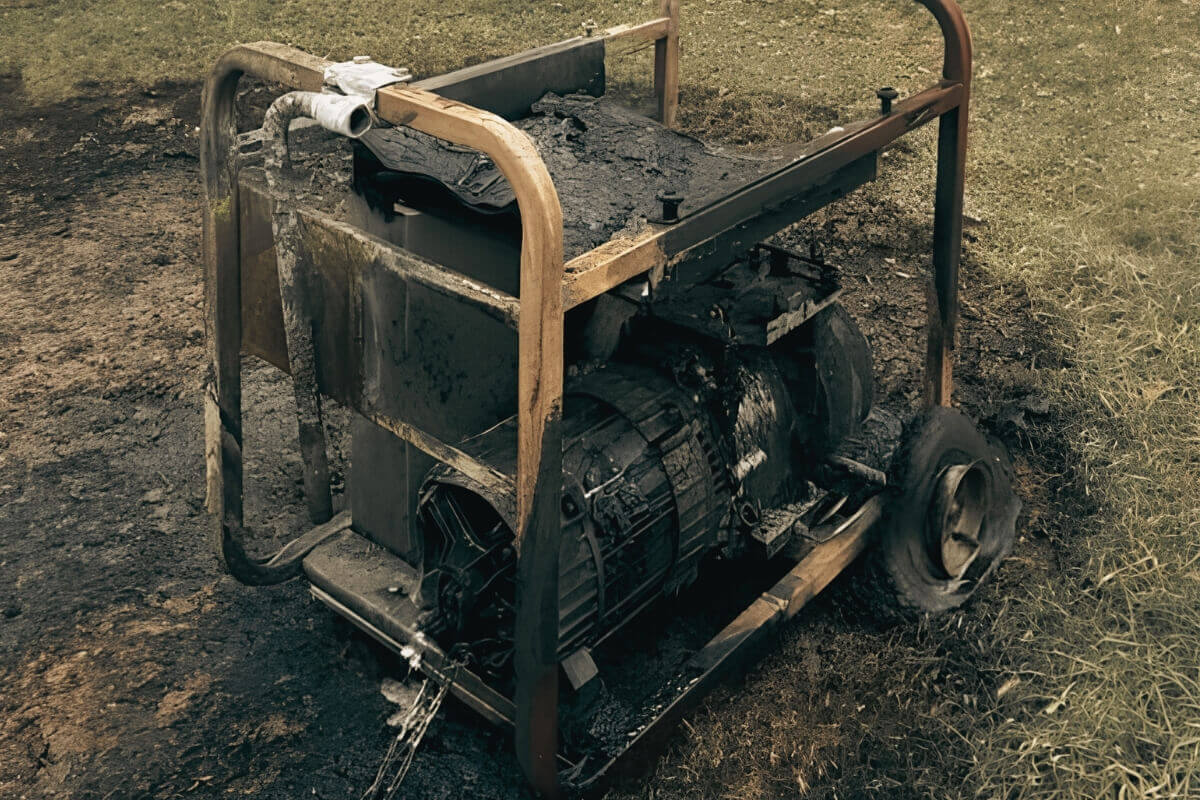
Generators provide reliable backup power for homes, job sites, and remote locations during power outages and emergencies. They keep essential equipment and daily activities running when electricity is unavailable. However, improper installation, poor maintenance, gas leaks, and unsafe operation can increase the risk of fires. If a fire starts, it can spread to the fuel tank and cause the generator to explode.
Fortunately, these risks can be greatly reduced through proper installation, safe operation, and regular maintenance. In this blog, we explore why generators explode and share essential prevention tips to help you operate safely and avoid critical system failures.
What happens when a generator explodes?
A generator explosion is a sudden and violent event caused by rapid combustion, a buildup of internal pressure, or the failure of a component containing fuel, heat, or electrical energy. It does not always involve a large fireball. In many cases, it is a powerful internal burst that can damage the generator, start a fire, or cause serious injury.
Generators do not create electricity. Instead, they convert fuel such as gasoline, propane, or diesel into electrical energy, producing heat during operation. If that heat is not properly managed or is combined with unsafe conditions, it can trigger a chain of events that may cause it to explode.
Types of generators and their unique risks
Generators come in many shapes and sizes, and each type carries its own set of safety risks.
- Portable gasoline and diesel generators: Easy to move and commonly used for homes, outdoor events, and job sites. However, they face higher fire or explosion risks because of fuel spills, overheating, and misuse in tight or poorly ventilated spaces.
- Standby home generators: Permanently installed outside the home and start automatically during power outages. Generally safer when professionally installed. Fuel leaks, blocked ventilation, and faulty wiring can still lead to can cause them to catch fire or explode.
- Industrial and commercial generators: Used in factories, construction sites, and commercial buildings. High power output and complex fuel systems require regular maintenance. Heavy loads, continuous operation, and demanding environments increase the risk of overheating, fuel mishandling, or pressure-related failures that can lead to serious accidents.
What causes generators to explode
1. Fuel system failures (most common risk)
Fuel-related issues release flammable fumes that can easily ignite when exposed to heat or sparks.
- Hot Refueling & Spills: Refueling a hot or running generator can cause spilled gasoline or diesel to hit a hot muffler or engine surface, causing the generator to catch fire or explode..
- Vapor Accumulation: Vapors build up due to leaks, overfilling, poor ventilation, or blocked passages in the carburetor and fuel lines.
- Tank Overfilling: Overfilling the gas tank allows expanding gasoline to flow onto a hot motor, igniting a fire.
- Running on Fumes: Opening a gas tank when the generator is running low on fuel exposes highly flammable fumes to potential internal or external sparks.
2. Mechanical and engine failures
- Overheating: Poor ventilation, low oil levels, clogged cooling fins, or exceeding runtime limits (typically 8 to 24 hours) cause severe overheating and high internal pressure.
- Component Rupture: Extreme pressure combined with weaknesses (like a cracked cylinder head, worn gasket, or blocked exhaust) can force parts to burst, sending debris outward or igniting nearby fuel vapors.
- Internal Damage: Broken pistons, connecting rods, or neglected maintenance (skipped oil changes, old filters) can fracture the engine block, releasing hot oil and gases.
3. Electrical system faults
- Overloading & Short Circuits: Damaged wiring, faulty transfer switches, incorrect grounding, or running a generator without a working circuit breaker leads to dangerous overheating and arc flashes.
- Battery Hazards: Overcharging or using faulty batteries releases highly flammable hydrogen gas, while loose or corroded connections can generate sparks. A spark from electrical or mechanical sources can ignite the hydrogen gas, causing an explosion.
- Inferior Cables: Using substandard or improperly sized extension cords causes wiring to overheat, melting plastic insulation and potentially igniting the generator fuel tank.
4. Operational and installation errors
- Backfeeding: Plugging a generator directly into a wall outlet during a blackout creates a deadly electrical hazard, severe circuit overload, and fire risk when the regular grid power returns.
- Improper Installation: Inadequate ventilation, unstable placement, or incorrect connections directly cause fuel leaks, overheating, and electrical shorts.
- Improper maintenance: Neglecting routine maintenance can lead to component wear, sparking at the brushes or commutator, and short circuits, potentially causing the generator to explode.
How to prevent generator explosions and operate safely
Proper installation, safe operation, and regular maintenance are the best ways to reduce the risk of generator explosions.
1. Place the generator in a safe location
- Never operate a generator indoors or in enclosed spaces.
- Position it at least 15–20 feet away from buildings.
- Keep it away from direct sunlight and other heat sources.
- Operate the generator in a well-ventilated area.
2. Refuel safely
- Turn off the generator and allow it to cool completely before refueling.
- Use clean, approved fuel stored in labeled containers.
- Keep fuel away from the generator while it is running.
- Avoid using the wrong or contaminated fuel.
- Do not overfill the fuel tank; leave room for fuel to expand. For details on the specific fuel level, please refer to “How to gauge generator oil level.“
3. Inspect and maintain the generator regularly
- Check fuel lines, tanks, hoses, and connections for leaks or damage.
- Change the oil and replace air and fuel filters as recommended.
- Inspect for worn, cracked, or damaged components.
- Follow the manufacturer’s maintenance schedule and operating instructions.
- Run the generator periodically to ensure it remains in good working condition.
4. Prevent overloading
- Do not exceed the generator’s rated capacity.
- Avoid connecting high-surge appliances that can overload the unit.
- Upgrade to a larger generator if more power is required.
5. Follow electrical safety practices
- Use heavy-duty extension cords with the correct gauge.
- Ensure proper grounding or bonding according to the manufacturer’s instructions and local electrical codes.
- Inspect wiring regularly for damage.
- Avoid unsafe electrical connections that may cause sparks or arc flashes.
- Inspect the generator and battery regularly for signs of damage or faults.
- Keep the battery area clean and well ventilated to prevent hydrogen gas buildup.
6. Be prepared for emergencies
- Keep a fire extinguisher nearby while the generator is operating.
- Make sure anyone using the generator understands its basic safety procedures.
What to do during and after a generator explosion or danger
1. Respond to warning signs immediately
- Watch for smoke, sizzling sounds, strong fuel odors, or other unusual signs.
- Shut down the generator only if it is safe to do so.
- Evacuate the area immediately if there is a risk of fire or explosion.
2. Use the correct fire extinguisher
- Never use water on fuel or electrical fires.
- Use a Class B extinguisher for flammable liquid fires.
- Use a Class C extinguisher for electrical fires.
- A multi-purpose ABC extinguisher can be used for general fire emergencies.
- Call emergency services immediately if the fire cannot be controlled safely.
3. Evacuate the area
- Keep everyone away from the generator.
- Stay clear of fuel spills, exposed wiring, and hot surfaces.
- Do not allow anyone to re-enter the danger zone until it is safe.
4. Provide first aid
- Cool minor burns with clean water.
- Move anyone affected by smoke to fresh air.
- Clean and bandage minor cuts.
- Seek immediate medical attention for serious burns, heavy smoke inhalation, or head injuries.
5. Inspect the generator after the incident
- Do not restart, repair, or move the damaged generator.
- Have the generator inspected by a qualified technician.
- Repair or replace the generator only after it has been declared safe for use.
Summary
Generators rarely explode, but when they do, it’s usually due to improper fuel handling, electrical faults, overheating, poor maintenance, or unsafe operation. Most of these incidents are preventable with proper installation, regular inspections, and responsible use.
For long-term safety and dependable performance, choose a reliable, high-quality generator from BISON. As a trusted generator manufacturer with years of export expertise, BISON delivers rigorously tested, reliable power solutions engineered to eliminate critical failure risks. Partner with us to provide your customers with safer, high-performance generators built for long-term durability.
FAQs