Two generators with similar ratings can perform very differently depending on their fuel type. Choosing the wrong option in a diesel vs. LPG generator comparison can affect your operation for years, influencing upfront and operating costs, environmental impact, maintenance requirements, and overall ownership.
This article provides a detailed diesel generator vs. LPG generator comparison covering fuel types, costs, performance, and decision-making criteria to help you choose the right generator for your application.
What are diesel and LPG generators?
Diesel generators
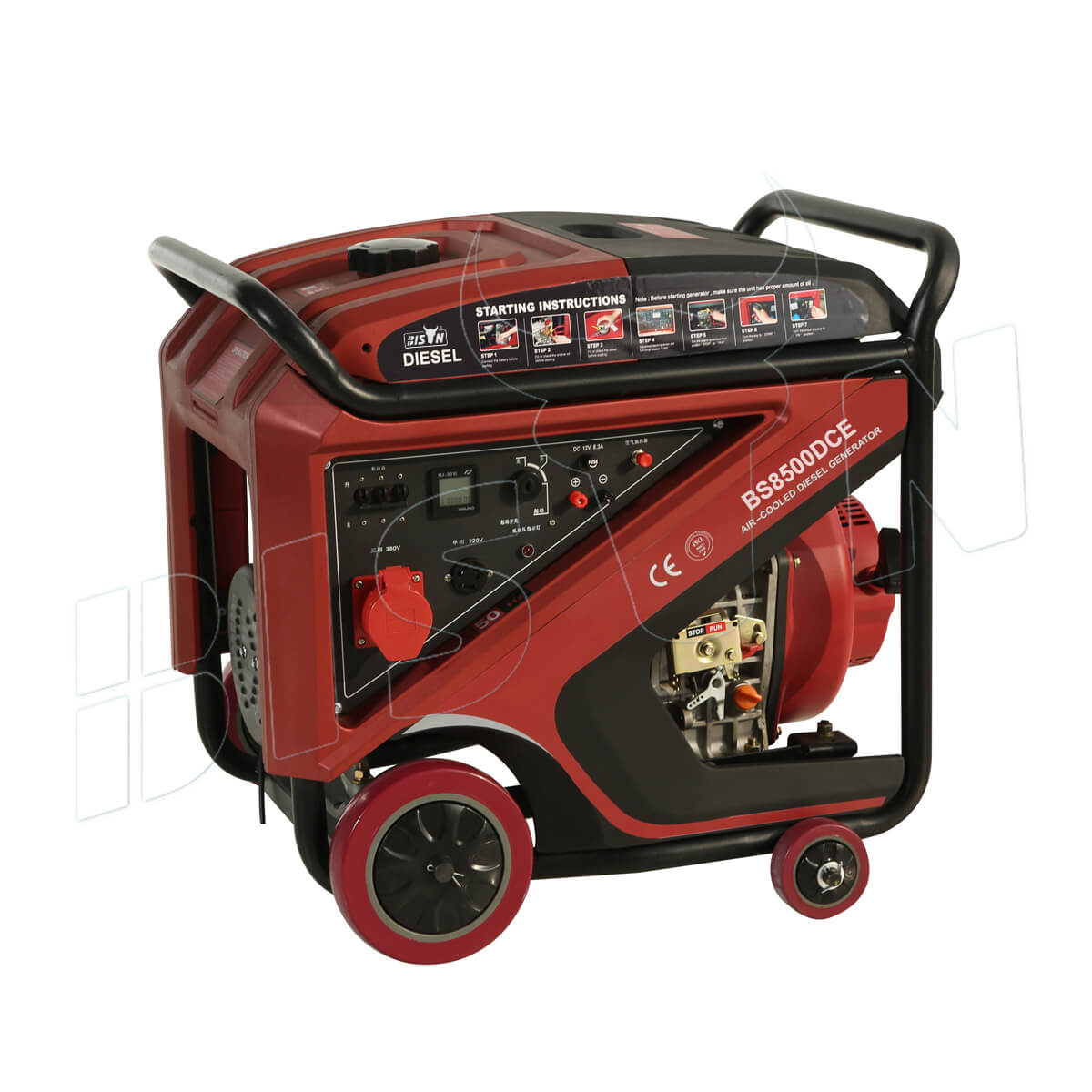
Diesel generators produce electricity by burning diesel fuel. They combine a diesel engine and an alternator to convert the chemical energy in diesel fuel into mechanical energy and then into electrical power. They use compression ignition, where high-pressure air ignites the injected fuel without spark plugs.
The compression ignition cycle handles sudden load spikes effectively, providing immediate torque when large motors or equipment start, making them suitable for heavy-load applications such as:
- Industrial manufacturing sites
- Data centers
- Construction sites
- Large residential properties
LPG generators
LPG generators run on propane or butane using a spark-ignition engine. The fuel enters the engine as vapor, helping prevent fuel system degradation during storage. Unlike diesel, LPG is produced from natural gas processing.
This fuel stability makes LPG generators suitable for long-term standby and intermittent use, including:
- Residential backup
- Remote or off-grid locations
- Outdoor events
- Cabins, farms, and mobile setups
Diesel generator vs. LPG generator
1. Core differences in engine technology and fuel delivery
Compression ignition vs. spark ignition
Diesel engines use high compression ratios (typically 14:1 to 25:1) to auto-ignite fuel, reducing failure points by eliminating spark ignition systems. LPG engines operate at lower compression ratios (8:1 to 12:1) and rely on spark plugs for ignition. Diesel engines produce peak torque from idle, while LPG engines reach their limits faster under sustained resistive loads.
Fuel storage and supply
Diesel requires vented storage tanks with secondary containment and regular maintenance because it is prone to microbial growth and fuel degradation. LPG is stored under pressure in cylinders or bulk tanks, preventing contamination and degradation. It can remain stable for a decade or more in a cool environment without fuel quality concerns.
Operational logistics and fuel supply
Diesel benefits from a well-established supply chain, including bulk delivery and on-site storage, making it ideal for remote locations or prime power applications. Conversely, LPG availability is highly reliable in urban/suburban areas but requires diligent scheduling in remote regions to avoid supply gaps.
2. Fuel efficiency and energy density
Diesel offers higher energy density (approx. 137,000 BTUs/gal vs. 91,500 BTUs/gal for LPG), enabling longer runtimes with smaller on-site storage footprints. In practice, diesel engines consume approximately 25–40% less fuel per kWh than comparable LPG engines.
3. Fuel cost and price volatility
Diesel prices track crude oil markets, while LPG is linked to natural gas. Although regional pricing varies and bulk LPG contracts may offer predictability, both fuels remain subject to market volatility. Factoring in typical generator efficiency, diesel generates electricity at approximately $0.036/kWh, compared to $0.044/kWh for LPG — making diesel roughly 20% cheaper to operate under current market benchmarks.
4. Performance comparison
Load Handling
Diesel generators excel in high-power applications, with robust designs capable of sustaining industrial loads exceeding 2,000 kW without thermal fatigue.
LPG generators are better suited for light to mid-range power needs. While diesel is prone to carbon buildup during light-load operation, LPG handles variable load cycles more cleanly, making it an efficient alternative for sites with fluctuating power demands under 150 kW.
Startup and cold weather performance
Diesel fuel begins to gel at low temperatures, often requiring block heaters and fuel additives. LPG efficiency is weather-dependent due to its reliance on liquid-to-vapor conversion. In cold climates, high fuel demand can cause cylinder frosting and pressure drops, even well above -42°C. In such conditions, heated regulators or insulated enclosures are essential.
High altitude and temperature derating
Turbocharged diesel engines perform better at high altitudes because the turbocharger compresses intake air, maintaining a denser air-fuel mixture over a wider operating range. High ambient temperatures reduce cooling efficiency for diesel generators. LPG runs somewhat cooler — a marginal advantage.
5. Environmental impact, compliance, and noise
Emissions and regulatory compliance
LPG burns significantly cleaner than diesel, emitting negligible particulate matter (PM2.5) and lower levels of NOx and CO2. In some regulated environments, LPG may be the only compliant option.
Noise and vibration
Open-frame diesel generators in the 20–50 kW range typically produce noise levels between 90 and 105 dB(A) at one meter. Comparable LPG generators are generally quieter.
5. Safety and installation considerations
Fuel properties and fire risk
Diesel: Features a high flash point (>52°C), making it inherently stable and less prone to accidental ignition. The primary risks are liquid spills and soil contamination.
LPG: Being heavier than air, leaked LPG pools at floor level, creating significant explosion risks in enclosed spaces.
Installation and environmental constraints
Diesel generators are suitable for indoor or outdoor placement, provided there is adequate exhaust ventilation. In contrast, LPG is generally prohibited in basements or below-grade areas due to the risk of gas accumulation.
LPG systems require more complex safety infrastructure, including gas detection and pressure-monitoring devices, whereas the safety focus for diesel systems lies in structural sealing and leak-prevention measures.
6. Cost analysis, maintenance, reliability, and lifespan
Purchase price and initial investment
Diesel generators typically command a higher purchase price than LPG generators of comparable power output, reflecting their heavier-duty construction.
B. Maintenance and operational expenses
Diesel Generators: Maintenance protocols are defined by the complexity of the high-pressure fuel injection system. Scheduled servicing includes injector inspections, fuel filter replacements, and the maintenance of emission-control hardware to ensure reliable operation.
LPG Generators: Maintenance is primarily directed at the spark-ignition system, including spark plugs and ignition coils, as well as regular testing of fuel pressure regulation components. While individual service events may cost less, the higher frequency of spark-plug and ignition-system replacements can increase total maintenance costs over the generator’s life.
Engine durability and longevity
Diesel engines are built with heavy-duty components to withstand compression ignition and are designed for long service life.
LPG engines operate at lower cylinder pressures, resulting in smoother combustion and reduced wear on piston rings, cylinder walls, bearings, and engine oil. However, industrial LPG engines may require major overhauls earlier than comparable diesel engines, depending on the engine design and operating conditions.
How to choose between diesel and LPG generator
Step 1: Define your power requirements
Determine the minimum continuous power requirement in kilowatts (kW) and add 20–25% surge capacity. Then classify the generator’s duty cycle as standby (under 200 hours per year) or prime power (daily 8-hour operation) to identify the most suitable fuel type, maintenance plan, and decision criteria.
Step 2: Assess fuel access in your location
Verify whether diesel can be delivered within 48 hours or if LPG suppliers provide reliable cylinder exchange or bulk refills.
Step 3: Total cost of ownership (TCO) projection
Calculate your TCO based on a 10,000 to 20,000-hour service life:
TCO = Purchase price + Installation + (Annual fuel × Years) + (Annual maintenance × Years)
Step 4: Check local regulations and restrictions
Zoning: Restrictions on fuel storage capacity and installation location.
Emissions: Tier 4 Final or Stage V requirements for diesel compared with simpler compliance for LPG in many urban areas.
Permits: Fire code requirements for fuel tanks, safety clearances, and installation.
Step 5: Match the generator type to the application
| Criteria | Diesel Generator | LPG Generator |
|---|
| High-Load Performance | Industry Standard | Moderate |
| Emissions Compliance | Complex | Simple |
| Cold-Weather Reliability | Requires Management | Pressure Sensitive |
| Long-term Storage | Risk of Degradation | Excellent Stability |
| Best Application | Heavy Industrial / Prime | Residential / Commercial Standby |
Summary
Choosing between diesel generators and LPG generators depends on your power needs, operating environment, fuel availability, and local regulations — neither is universally better.
As a specialized diesel generator manufacturer with extensive field experience, BISON ensures every unit is built for peak efficiency and low total cost of ownership, making them a reliable choice for your inventory. While our core focus is high-performance diesel, we also provide custom LPG solutions for emission-sensitive applications. We look forward to collaborating with you to support your full range of power equipment needs.
FAQs