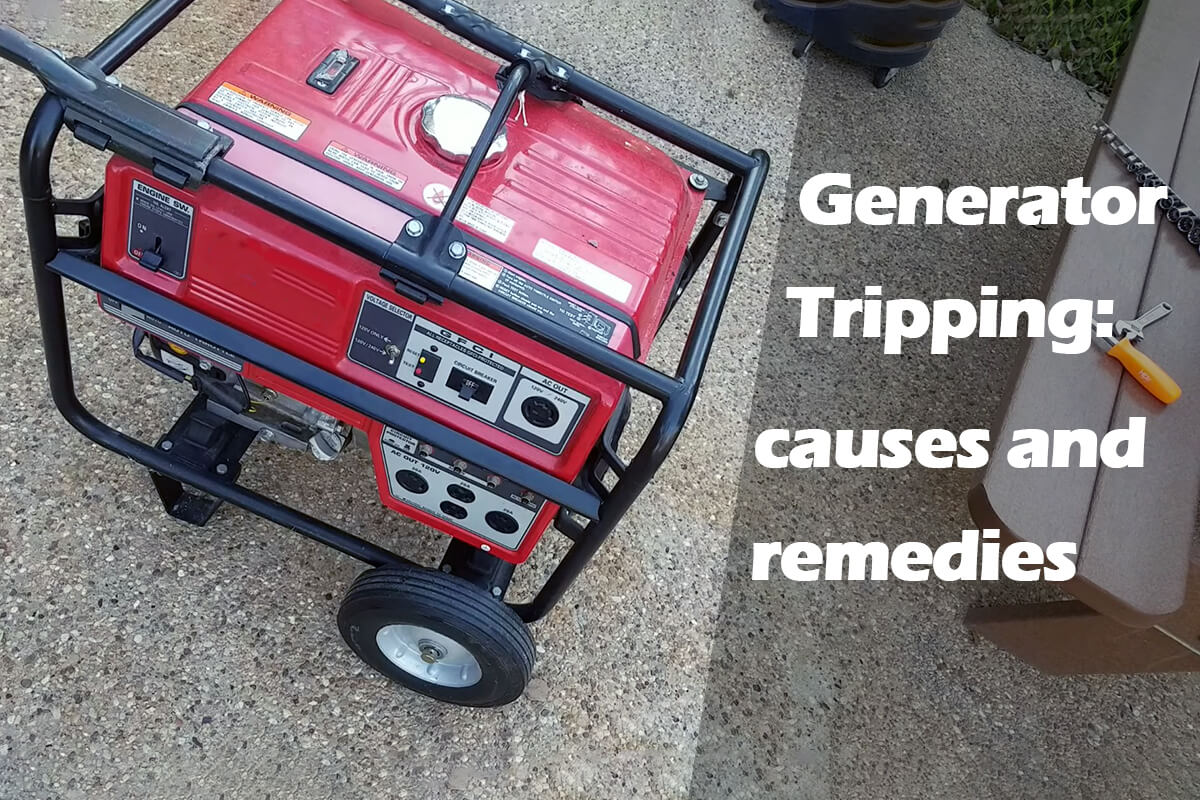
Generator tripping is a safety feature that automatically shuts down the generator when issues like electrical overloads, mechanical problems, or extreme conditions occur. This prevents damage to the generator, connected devices, and ensures user safety.
Sudden power loss can halt production, affect safety, or disrupt daily life. Understanding the causes and remedies is crucial for keeping equipment safe, avoiding downtime, and ensuring smooth operations. In this guide, BISON, a professional generator supplier, explained the causes of generator tripping, how to troubleshoot the problem, and measures to prevent future tripping.
Understanding generator tripping
Generator tripping is a safety mechanism designed to protect both the generator and connected equipment. When abnormal conditions occur, the generator automatically shuts down, preventing serious issues such as electrical faults, engine damage, or fire hazards.
Like your home’s electrical system, a generator is protected by circuit breakers and overload protection systems. These devices detect unsafe conditions and “trip,” immediately stopping the generator to prevent minor problems from becoming major failures.
Common causes of generator tripping
1. Electrical/internal generator faults
- Overloading: asking the generator to supply more than its rated capacity can cause overheating of the windings. Overload protection trips the generator to prevent damage.
- Short circuits: sudden current surges from short circuits can harm the generator and connected equipment. Circuit breakers trip to stop the flow of electricity.
- Rotor/stator failures: faults in rotor or stator windings cause abnormal currents or vibrations, triggering trips.
- Over-fluxing: excessive magnetic flux overheats the core and windings, prompting a trip.
- Differential protection trips: detects unusual current differences between terminals caused by internal faults, isolating the generator.
2. System disturbances/external causes
- External short circuits: faults in the grid or connected circuits produce high currents, triggering trips to protect the system.
- Loss of synchronism: falling out of phase with the grid leads to instability; protection systems trip the generator.
- Over/under frequency: deviations from the safe frequency range due to load changes or grid issues trigger trips.
- Over/under voltage: unsafe voltage levels can damage equipment, causing protective relays to trip.
3. Mechanical and prime mover failures
- Overheating: high engine temperature can damage the generator; temperature sensors initiate a trip.
- Low oil or coolant pressure: insufficient lubrication or cooling triggers trips to prevent engine damage.
- Overspeed: exceeding safe rotational speed activates overspeed protection.
- Vibration or bearing issues: excessive vibration or worn bearings are detected by protection systems, causing trips.
4. Environmental causes
- Humidity: high moisture can lead to insulation failure and short circuits.
- Dust/debris: accumulation of dust or foreign objects may cause overheating or electrical faults.
- Poor fuel quality: contaminated or low-quality fuel can lead to combustion issues and engine malfunctions.
Troubleshooting generator tripping
Initial safety measures
Turn off the generator: ensure the generator is completely shut down to prevent injury or further damage.
Inspect for visible damage: check for obvious faults such as burnt wires, oil leaks, loose connections, or corrosion.
Step-by-step troubleshooting
Step 1: Check the load
Ensure the generator is not overloaded. Reduce or disconnect non-essential loads and try restarting the generator.
Step 2: Check the GFCI receptacle
Turn off the generator and disconnect all appliances.
Press the “reset” button on the GFCI outlet and restart the generator.
If the button does not stay depressed, the GFCI outlet may be faulty and should be replaced.
Keep the gfci clean and dry, as dust, water, or electrical faults can damage it and cause trips.
Step 3: Inspect electrical connections and breakers
Check all wiring, terminals, and circuit breakers for loose connections, corrosion, or damage.
Reset any tripped breakers and replace cords or breakers that are faulty.
Look out for issues like burning smells or automatic air switch trips, which may indicate a bad contact or insufficient spring pressure in the switch.
Step 4: Check capacitors (if applicable)
Some circuit breakers have built-in indicators for overloads, but they are not always reliable.
Use a multimeter to measure resistance at lead wire connections.
A reading of ‘ol’ (overload) or infinity indicates a faulty breaker that must be replaced.
Step 5: Examine engine systems
Oil level and pressure: low oil or faulty sensors can trigger trips—refill or service as needed.
Coolant level and temperature: check coolant levels and ensure the engine is not overheating.
Fuel system: verify fuel supply, quality, and filters to prevent combustion problems.
Step 6: Read error codes (if available)
Modern generators often display error codes or warnings. Consult the user manual to interpret codes and address the indicated faults.
Analyze generator logs, relays, and sensor data to identify the root cause.
When to call a professional
- The generator trips repeatedly despite troubleshooting.
- Complex electrical or mechanical faults are suspected.
- Safety hazards exist that require specialized tools or expertise.
Diesel power genset trip
Tripping tendency
Sometimes, a diesel generator operates normally for a few minutes, but the automatic air switch trips repeatedly, often accompanied by a burning smell.
Causes:
- Poor connection of the automatic air switch’s central contacts or insufficient spring pressure.
- Loose lead-out wires on the switch.
Both issues increase contact resistance in the primary circuit, generating excessive heat, which triggers thermal release and false tripping.
Solutions:
Clean and smooth the main contacts of the automatic air switch using a fine file or sandpaper.
Adjust the spring pressure to ensure proper contact.
Apply conductive paste if necessary and tighten connection screws.
The diesel generator trips immediately after connecting the load
If the generator starts normally but trips as soon as the external load is connected:
Causes:
- The external circuit is short-circuited.
- Overload conditions.
Solutions:
Locate and repair any short circuit in the external circuit.
Reduce the load to lower the generator’s current output.
Consequences of an unscheduled generator trip
1. Immediate impacts
Grid instability: sudden loss of power may affect connected loads and other generators.
Equipment damage: sensitive machinery and electronics may experience voltage fluctuations or surges, potentially causing damage.
2. Operational and financial impacts
Operational disruptions: production lines may halt, critical services may be interrupted, and employees may face downtime.
Financial losses: revenue can be lost, startup costs increase, and penalties may occur if power delivery commitments are not met.
3. Safety risks
Fire and electrocution: trips can indicate underlying problems. If a gfci or circuit breaker fails, the risk of fire or electric shock rises. Regular inspection and maintenance of these protective devices are essential to prevent accidents.
Preventive measures and best practices for avoiding generator tripping
1. Routine maintenance
- Engine: check for wear, overheating, and proper operation.
- Fuel system: Use clean fuel and replace filters.
- Lubrication: maintain oil levels and quality.
- Electrical systems: inspect wiring, terminals, breakers, and sensors.
- Relay calibration: ensure relays function correctly.
- Predictive maintenance: Use monitoring tools to detect issues early.
2. Proper load management
- Stay within the generator’s rated capacity.
- Monitor voltage, current, and frequency; correct deviations promptly.
- Balance loads when running multiple generators.
3. Environmental care
- Keep the generator clean, dry, and ventilated.
- Prevent dust, debris, and moisture buildup.
- Maintain proper airflow to avoid overheating.
4. Use quality BISON components
- Use high-quality fuel, lubricants, and replacement parts.
- Choose capacitors with adequate voltage rating, high impedance, heat tolerance, and protection against moisture and corrosion.
5. Advanced protection and monitoring
- Install redundant relays and breaker failure protection for critical systems.
- Use SCADA or digital fault recorders to monitor performance.
- Review monitoring data regularly to prevent faults.
6. Operator training
- Train operators to recognize alarms and abnormal readings.
- Establish standard procedures for trips and faults.
- Ensure operators know when to troubleshoot and when to call professionals.
Summary
Generator tripping is a critical safety mechanism that protects both the generator and connected equipment from electrical, mechanical, and environmental faults. While trips may temporarily disrupt operations, they prevent damage, ensure safety, and maintain a stable power supply.
BISON, a professional generator supplier in China, emphasizes regular maintenance, proper load management, and timely inspections to minimize unplanned trips. For a safe, reliable, and uninterrupted power supply, BISON generators and generator parts can be imported from China. We consistently provide the most reliable service and the most durable products.