In industrial and commercial settings, a stable and reliable power supply is essential. 3 phase generators are widely used in these environments because they deliver efficient, smooth, and high-capacity power output capable of handling large electrical loads. A 3 phase generator produces three electrical currents that operate together, each starting at a different time. Under ideal conditions, the load is evenly distributed across all three phases — this is known as a balanced system.
However, in actual operation, loads are rarely equal across all phases. When one phase carries more or less current than the others, the system becomes unbalanced. If left unaddressed, this condition can cause voltage variations, excessive heat buildup in the generator windings, and a significant reduction in overall system performance.
This guide covers balanced and unbalanced loads in 3 phase generators — causes, effects, detection methods, and practical solutions.
Fundamentals: The anatomy of a balanced 3 phase system
Basic Principles of 3 phase generation
A 3 phase electrical system generates power through three alternating currents of equal magnitude that are separated by 120° in phase. This arrangement provides a continuous flow of energy, reduces power fluctuations, and delivers smoother and more efficient performance than single-phase systems.
The main advantages of a 3 phase system include higher efficiency, smooth operation, and scalability. It can transmit more power using less conductor material, provide constant torque in motors to reduce vibration and mechanical stress, and support both small and large electrical loads.
Balanced load fundamentals
A balanced 3-phase system requires three conditions: equal current in each phase, phase voltages separated by 120°, and zero (or near-zero) neutral current.
Because a generator’s three windings are physically positioned 120° apart, the output voltages are naturally offset by 120°. When equal loads are applied across all three phases, the currents mirror this symmetry — each phase carries identical current, and the system remains stable.
A key consequence of this balance is that the neutral current drops to zero; even if the neutral line is removed, it will have no impact on the operational performance of the circuit.
What is an unbalanced load?
An unbalanced load occurs when one phase carries more or less current than the others. For example, increasing the load on one phase causes it to draw more current, creating an imbalance in the system. This causes waveform distortion in both magnitude and phase angle, increased power losses, and current flow through the neutral conductor.
Since different loads draw different amounts of current, some degree of imbalance is common in real-world systems, which is why power distribution systems typically include a neutral conductor.
How to detect load imbalance in a 3 phase generator
One point must be clearly understood: it is the “load” — not the “power source” — that determines the state of the system. Unless the generator windings are incorrectly arranged, which is uncommon, the source does not cause the imbalance. Instead, the way the load is distributed across the phases determines whether the system remains balanced or becomes unbalanced.
Common causes of unbalanced loads
- Uneven distribution of loads across the three phases
- Faulty motors, transformers, or other electrical equipment
- Unbalance in windings of 3-phase appliances like 3-phase induction motors.
- Varying or intermittent load demands
- Large single-phase loads connected to one phase
Effects of unbalanced loads on generators
Impact on generator performance
- Reduced efficiency due to uneven load distribution across phases
- Increased heating in generator windings and higher thermal stress on components
- Reduced generator capacity and usable power output
Potential generator damage
- Damage to rotor insulation due to excessive heat
- Increased mechanical stress on the rotor and bearings
- Excessive vibration caused by unequal magnetic forces
- Premature failure of motors and other 3-phase equipment
- Lower-than-normal motor torque output
- Higher current draw in motors and 3-phase rectifiers
- Accelerated wear of generator components
Effects on power quality
- Voltage imbalance and uneven voltage drops between phases
- Introduction of harmonics, causing additional heating and electromagnetic interference
Neutral-related safety issues
- Overloading of the neutral conductor
- Higher risk of overheating
- Potential fire hazards and safety concerns
Methods to analyze unbalanced loads
1. Measurement techniques
- Current and voltage checks — Clamp-on ammeters and multimeters are used to measure phase currents and voltages. Unequal readings indicate a load imbalance.
- Neutral current observation — Any measurable neutral current suggests unequal load distribution across the phases.
- Power factor analysis — Measures the power factor of each phase. A significant difference in power factor between phases often points to inefficient or mismatched loads contributing.
2. Calculation methods
Percent current imbalance = (Maximum phase current − Minimum phase current) ÷ Average phase current × 100%
Where: Average phase current = (Phase A current + Phase B current + Phase C current) ÷ 3
Similar calculations can also be used to determine voltage imbalance:
Percent voltage imbalance = Maximum deviation from average voltage ÷ Average voltage × 100%
Where: Maximum deviation = the largest absolute difference between any single phase voltage and the average voltage
Manual and real-time analysis — Power meters or energy analyzers can display real-time phase current and voltage imbalance values and track changes over time. Motor drive analyzers are better suited for motor-side monitoring rather than generator-side analysis.
3. Advanced tools
- Power quality analyzers — Measure voltage, current, harmonics, and phase angles. Provide a complete assessment of load balance.
- Simulation software — Models electrical systems to predict imbalances.
- Load flow analysis — Examines load distribution within electrical networks. Identifies potential problem areas and optimizes load distribution across phases.
4. Generator protection relays
Detect overcurrent, phase loss, and unbalanced conditions. Trigger alarms or protective shutdowns to prevent equipment damage.
Unbalanced load management solutions
1. Load balancing techniques
Load distribution and equipment selection
Distribute loads evenly across all three phases by reassigning circuits or equipment to minimize phase current differences. Where possible, replace multiple single-phase loads with three-phase alternatives such as motors, HVAC units, and heating systems, which naturally draw balanced current and address imbalance at its source.
Using transformers for load balancing
- Use isolation transformers or autotransformers to improve load distribution.
- Shift loads between phases when necessary.
- Zig-zag transformers can help balance neutral currents and reduce harmonic effects.
2. Protection and correction methods
Generator AVR and generator protection systems
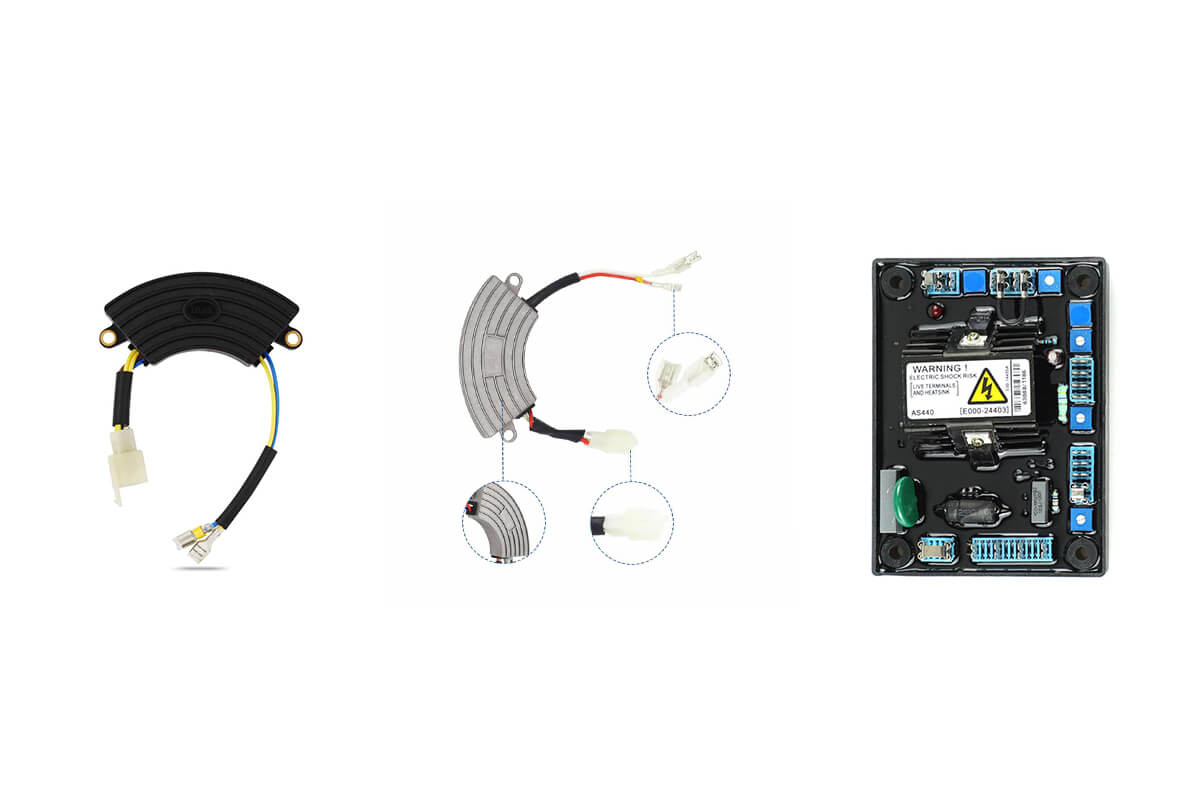
The generator’s AVR serves as the first line of defense, continuously adjusting excitation to compensate for voltage deviations caused by unbalanced loads. Negative-sequence overcurrent relays detect imbalance-related currents and trigger alarms or shutdowns, while over/under voltage relays and thermal overload protection safeguard windings and connected equipment from damage.
Power factor correction devices
- Install capacitor banks or automatic power factor correction (APFC) units.
- Reduce reactive current demand on overloaded phases.
- Improve generator efficiency and overall system performance.
- APFC units automatically adjust to changing load conditions.
3. Monitoring and maintenance
Routine phase current monitoring
- Measure phase currents regularly using clamp meters or power analyzers.
- Compare readings with baseline values, identify developing imbalances.
Thermal inspections
Use infrared thermography to detect hotspots in switchgear, busbars, and cable connections before they cause equipment failure.
Generator servicing intervals
- Increase maintenance frequency when generators operate under unbalanced conditions.
- Check winding insulation, bearing condition, and vibration levels. Monitor for signs of mechanical stress caused by imbalance.
4. System improvements
Automatic load-balancing switches
- Continuously monitor phase currents.
- Automatically transfer loads between phases to maintain balance.
- Useful for facilities with changing load demands.
Static VAR compensators and active power filters
- Provide dynamic correction for severe load imbalance.
- Reduce harmonic distortion and reactive power issues.
Equipment upgrades
- Replace aging single-phase equipment with three-phase alternatives.
- Upgrade motors and major electrical loads when possible.
- Use phase-balancing transformers or electronic soft starters when full replacement is not feasible.
Summary
Unbalanced 3 phase generator loads can reduce efficiency, increase equipment wear, and create safety risks. Effective load management helps improve generator performance, extend equipment lifespan, and ensure a stable power supply for industrial and commercial applications.
As a leading 3 phase generator manufacturer, BISON’s superior winding quality and precision manufacturing ensure minimal current imbalance across all three phases — delivering stable, reliable power that protects your equipment and maximizes uptime. Partner with BISON, partner with confidence.
FAQs