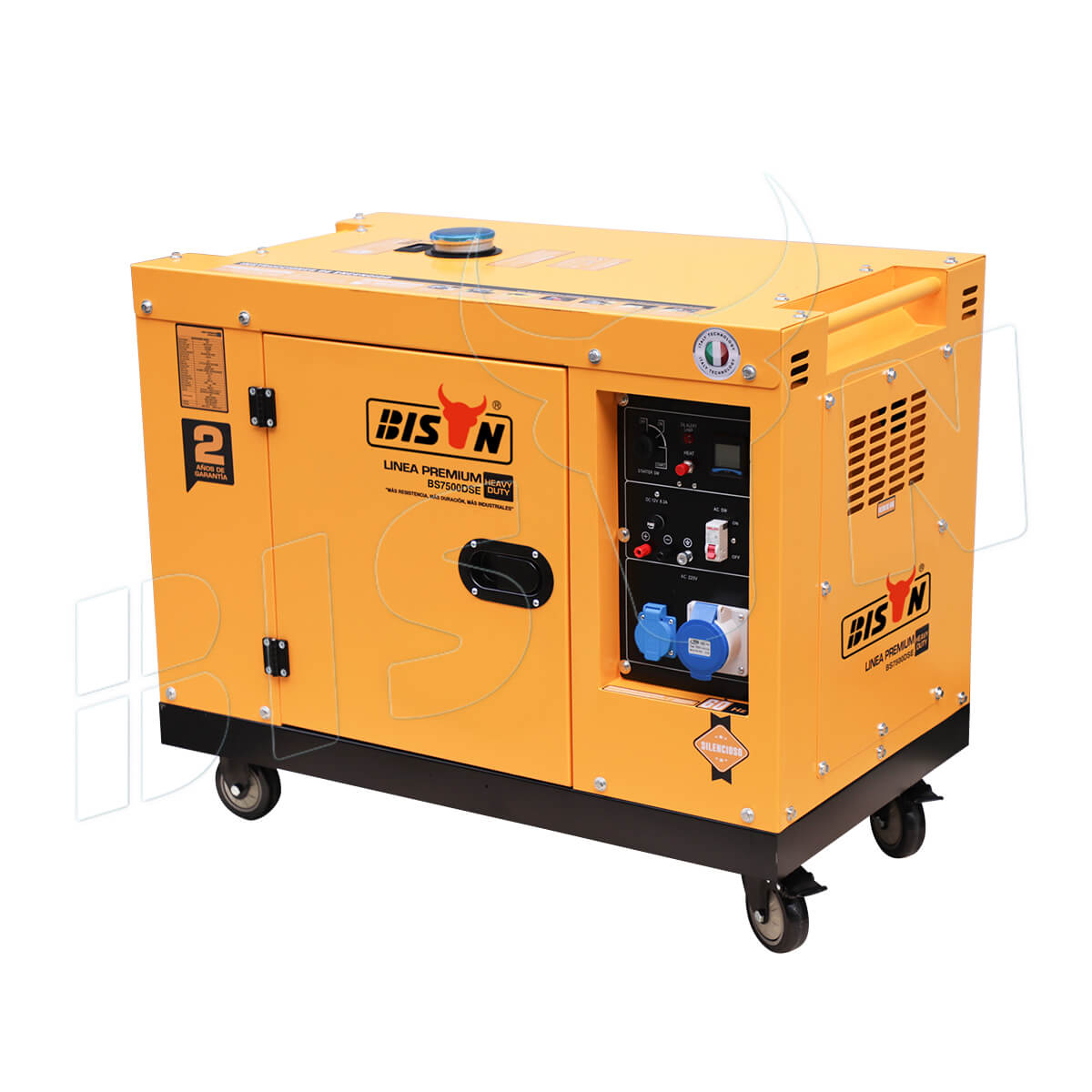
When the power goes out, diesel generators step in to keep homes, businesses, and industries running. Behind every reliable generator is an important component: the coolant. The right coolant prevents the engine from overheating, reduces wear, and helps maintain stable performance. Choosing the wrong coolant can lead to engine damage, unexpected downtime, and costly repairs.
In this blog, BISON will explain why diesel generators require coolant—covering its functions, the various types available, and which coolants are used in diesel generators.
Why do diesel generators need coolant
Diesel generators produce electricity through internal combustion. While this process is efficient and powerful, it also generates a large amount of heat. If this heat is not properly controlled, it can damage engine components, reduce efficiency, and shorten the generator’s lifespan.
Most modern diesel generators use liquid cooling systems because they provide more stable and efficient heat control than air-cooled systems. Coolant is usually a mixture of water and antifreeze designed to control temperature and protect engine components. In a liquid-cooled system, coolant circulates through the engine to absorb heat and maintain a safe operating temperature.
The cooling system typically includes a radiator, water pump, hoses, and coolant passages inside the engine. The water pump circulates coolant through the engine block and cylinder head, where it absorbs heat from combustion. The heated coolant then flows to the radiator, where air removes the heat before the coolant recirculates back through the engine.
Key functions of coolant in diesel generators
- Freeze protection: Most diesel generator coolants protect against temperatures between −20°c and −45°c, depending on the formulation.
- Boil protection: Coolant raises the boiling point of the liquid in the cooling system. Most coolants boil between 104°c and 108°c, and the boiling point increases further when the cooling system is pressurized.
- Corrosion protection: Special additives in coolant help prevent corrosion inside the cooling system, protecting metal parts and reducing the risk of leaks.
- Rust prevention: High-quality coolant protects metal surfaces from rust, which helps maintain heat transfer efficiency and prolong engine life.
- Scale prevention: Coolant uses treated or deionized water to prevent mineral deposits and scale buildup.
Consequences of inadequate cooling
- Overheating, which can warp cylinder heads or damage internal components
- Cracked engine blocks, leading to expensive repairs or replacement
- Reduced efficiency, as excessive heat affects combustion performance
- Accelerated wear shortens the generator’s service life.
- Scale buildup and corrosion, which restrict coolant flow and reduce cooling efficiency
Types of coolants used in diesel generators
1. Water: Water is the simplest and most basic coolant used in diesel generators. In some situations, rainwater, river water, lake water, or tap water may be used. However, natural water sources should be filtered to remove dust and sediment before use. If groundwater with high hardness is used, it should be softened through boiling or chemical treatment to reduce mineral deposits.
- Pros: Low cost and easy to obtain; Excellent thermal conductivity for heat transfer.
- Cons: Freezes at 0°c 32°f, which can damage the engine in cold climates; Boils at 100°c 212°f, limiting high temperature performance; No corrosion protection, which can lead to rust and scale buildup.
2. Water glycol mixtures: Water glycol mixtures are the most commonly used coolant in diesel generators. These solutions typically mix water with ethylene glycol or propylene glycol in ratios such as 50:50 or 60:40. This mixture improves both freezing and boiling protection while providing basic corrosion resistance. The freezing point should normally be about 10°c lower than the lowest expected temperature in the operating area. The freezing point can be checked using a refractometer or special antifreeze test strips.
- Pros: Provides freeze protection in cold climates; Raises boiling point to reduce overheating risk; Offers corrosion protection for engine components.
- Cons: Slightly lower heat transfer than pure water; Requires monitoring of coolant concentration; Ethylene glycol is toxic, while propylene glycol is safer but more expensive.
3. Extended life coolants ELC or OAT: Extended life coolants ELC, also known as organic acid technology OAT, use organic acid inhibitors instead of traditional additives.
- Pros: Long service life often five years or more; Strong corrosion protection for aluminum and other metals.
- Cons: Higher cost than traditional coolants; May not be compatible with older engines or some gasket materials; Mixing with conventional coolant can reduce performance.
4. Hybrid organic acid technology HOAT: HOAT coolants combine organic acids and traditional inorganic corrosion inhibitors. This hybrid design provides balanced protection for both modern and older diesel engines.
- Pros: Excellent corrosion protection; Suitable for engines with mixed metal components; Good performance in both high and low temperatures.
- Cons: More expensive than standard water glycol mixtures; Compatibility issues if mixed with the wrong coolant type; Requires proper monitoring for maximum lifespan.
Which coolant is used in diesel generator: the golden rule
Follow OEM specifications: Original equipment manufacturer (OEM) specifications are designed based on the engine materials, cooling system design, and operating conditions. Using a coolant that meets these specifications ensures proper protection against corrosion, scale buildup, and overheating.
Consider climate and operating conditions: In cold regions, coolant must provide strong antifreeze protection to prevent freezing. In hot environments, a higher boiling point and efficient heat transfer are critical to avoid overheating.
Material compatibility and service intervals: Diesel engines may contain different materials such as aluminum, cast iron, or mixed metals. Coolants are formulated with specific additives to protect these materials from corrosion. Service life also varies depending on the coolant type. For example, OAT and HOAT coolants typically last longer, while IAT coolants require more frequent replacement.
Do not rely on coolant color: The color of the coolant, such as green, orange, pink, or blue, does not reliably indicate the type of coolant or its compatibility. Manufacturers may use different dyes, so relying on color alone can lead to mixing incompatible coolants and causing problems in the cooling system.
The danger of mixing coolants
Mixing incompatible coolants can reduce cooling performance and damage engine components. It may lead to:
- Gel or sludge formation that blocks coolant passages
- Reduced heat transfer and overheating
- Increased corrosion and scale buildup
- Premature wear of water pumps and seals
Coolant maintenance best practices
- Correct mixing ratios: For most diesel generators, a 50/50 mixture of coolant and water provides balanced freeze protection, higher boiling point, and corrosion resistance. In extremely cold climates, a 60/40 mixture may be used. However, coolant concentration should never exceed 70 percent, as excessive glycol can reduce heat transfer and increase engine temperature. Always use distilled or demineralized water to prevent mineral deposits and scaling.
- Regular inspections: Routine coolant checks help detect issues early. Inspect coolant level to ensure proper circulation, coolant condition for cloudiness, debris, or contamination, and color changes, which may indicate contamination or chemical breakdown.
- Testing methods: Testing coolant regularly ensures it still provides adequate protection. Common testing tools include: Refractometers, Hydrometers, Test strips.
- Flushing and refilling: Coolant additives gradually degrade and contaminants can accumulate over time. Following the OEM recommended flushing interval helps maintain cooling efficiency. Flushing removes old coolant, sediment, and corrosion byproducts before refilling with fresh coolant.
Precautions when using coolant
- Do not use 100% antifreeze: Pure antifreeze should not be used alone as a coolant. Antifreeze must be mixed with water to achieve proper cooling performance and heat transfer.
- Never open the radiator cap when the engine is hot: The cooling system becomes hot and pressurized during operation. Opening the radiator or coolant filler cap while the engine is running or immediately after shutdown can release hot coolant and steam, causing serious burns.
- Coolant replacement interval: Coolant must be replaced according to the type used and the manufacturer’s guidelines. Traditional IAT coolants typically require replacement every 2 years or about 24,000 miles (or equivalent operating hours), while OAT or HOAT coolants can last up to 5 years or longer.
- Handle antifreeze safely: Antifreeze coolant is toxic and should be handled carefully.
Summary
Coolant is essential for managing the high heat produced during diesel engine operation, preventing corrosion, scale buildup, and costly engine damage. Choosing the right coolant ensures optimal performance and extends the life of your diesel generator.
Of course, even with the highest-quality coolant, its effectiveness ultimately has its limits — the foundation of all performance still lies in a well-engineered engine. As a leading supplier of diesel generators, BISON designs its units with optimal compatibility with cooling systems in mind right from the outset, thereby making routine maintenance significantly easier. Partner with BISON today to provide your extensive customer base with the reliable power assurance they expect.
FAQs